
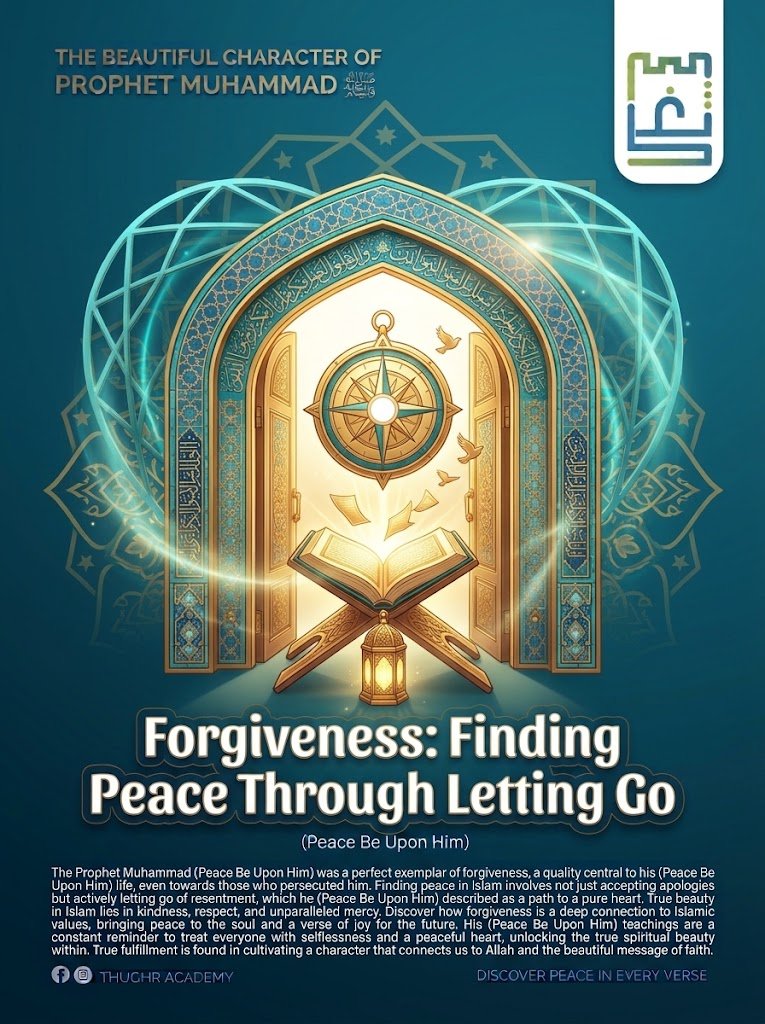
Forgiveness: Finding Peace Through Letting Go
Forgiveness is one of the most beautiful qualities in Islam. It means choosing to let go of anger and resentment instead of holding on to painful feelings. Forgiving others does not mean that what happened was right, but it allows us to respond with wisdom and seek peace.
Prophet Muhammad ﷺ was a wonderful example of forgiveness. Even when people treated him badly, he often responded with patience, kindness, and mercy. His character teaches us that forgiveness is a sign of strength, not weakness.
Forgiveness in the Quran
Allah says:
وَلْيَعْفُوا وَلْيَصْفَحُوا ۗ أَلَا تُحِبُّونَ أَن يَغْفِرَ اللَّهُ لَكُمْ
"Let them pardon and overlook. Would you not like that Allah should forgive you?"
(Surah An-Nur: 22)
This verse encourages us to forgive others and reminds us that we should also hope for the forgiveness and mercy of Allah.
How to Practise Forgiveness
1. Let Go of Anger
Try not to allow anger to control your actions. Take time to calm down before responding to someone who has hurt you.
2. Give Others a Chance
Remember that everyone makes mistakes. When appropriate, give people the opportunity to learn, improve, and make things right.
3. Choose Peace Over Revenge
Instead of seeking revenge, try to respond with wisdom and protect your heart from unnecessary hatred. Forgiveness can help you move forward.
The Beauty of Forgiveness
Forgiveness brings peace to the heart and helps build stronger relationships. It teaches us humility, patience, and compassion.
By following the example of Prophet Muhammad ﷺ, we can learn to forgive others while maintaining wisdom, dignity, and justice.
At Thughr Academy, we believe that learning Islam means developing a heart filled with faith, mercy, and good character.