
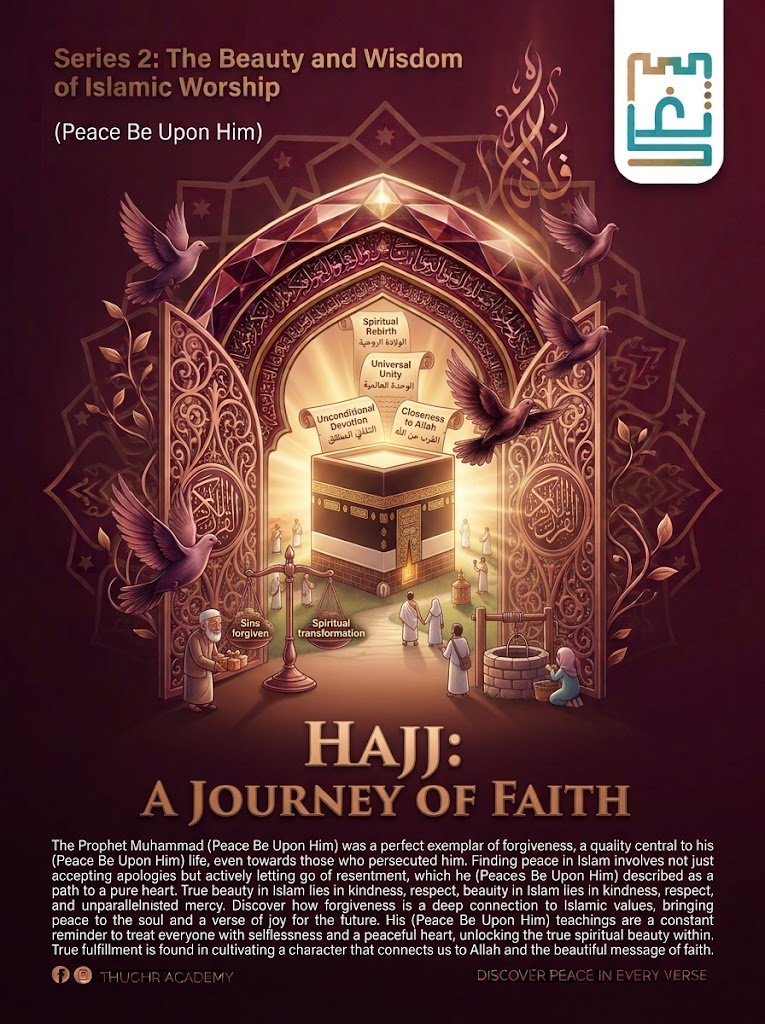
Hajj: A Journey of Faith
Hajj is one of the five pillars of Islam and a special journey that every Muslim who is physically and financially able must perform at least once in their lifetime.
Every year, millions of Muslims travel to Makkah from different countries and backgrounds to worship Allah together. During Hajj, they leave behind many worldly comforts and focus on their faith, reminding themselves that all people are equal before Allah.
Hajj in the Quran
Allah says:
وَلِلَّهِ عَلَى النَّاسِ حِجُّ الْبَيْتِ مَنِ اسْتَطَاعَ إِلَيْهِ سَبِيلًا
"And [due] to Allah from the people is a pilgrimage to the House – for whoever is able to find thereto a way."
(Surah Ali 'Imran: 97)
This verse explains that Hajj is an obligation for Muslims who have the ability to undertake this journey.
Important Lessons from Hajj
1. Equality Among Muslims
Muslims from different countries, cultures, and social backgrounds gather together in the same sacred places. Their unity reminds us that no person is superior to another because of wealth, nationality, or appearance.
2. Patience and Self-Control
Hajj involves physical effort, waiting, and following specific acts of worship. It teaches pilgrims to remain patient, control their behaviour, and treat others with kindness.
3. Sacrifice and Devotion
Hajj reminds Muslims of the devotion and obedience of Prophet Ibrahim عليه السلام and his family. It encourages believers to put their faith and obedience to Allah above worldly desires.
The Beauty of Hajj
Hajj is more than a journey to a sacred place. It is an opportunity for spiritual renewal, sincere repentance, and strengthening one's relationship with Allah.
It teaches humility, unity, patience, and complete devotion. The lessons of Hajj can continue to guide Muslims long after they return home.
At Thughr Academy, we believe that understanding the wisdom behind Islamic worship helps learners appreciate their faith and apply its teachings in everyday life.